

35 small-scale projects could close onshore gap
The Irish Wind Farmers Association has warned Ireland will not meet its 2030 renewable energy targets without a workable pathway for community and small farmer-led wind projects at its annual conference in Kilkenny.
The organisation told more than 100 members and stakeholders that one and two-turbine schemes owned by farmers and community groups are most disadvantaged under current planning, pricing and ownership regulations.
It welcomed elements of planning reform passed in October but said administrative and procedural delays remain an obstruction.
The organisation estimated that 35 new small-scale projects could close the State’s onshore community renewable energy target of 500MW by 2030.
A survey of members and stakeholders showed that 91.7% of respondents are not confident the Government can meet its 2030 climate obligations, with planning and grid connectivity cited as the biggest barriers.
The IWFA said a 2021 DECC policy requiring 100% community ownership has made many projects unbankable as lenders will not finance inexperienced stand-alone community schemes.
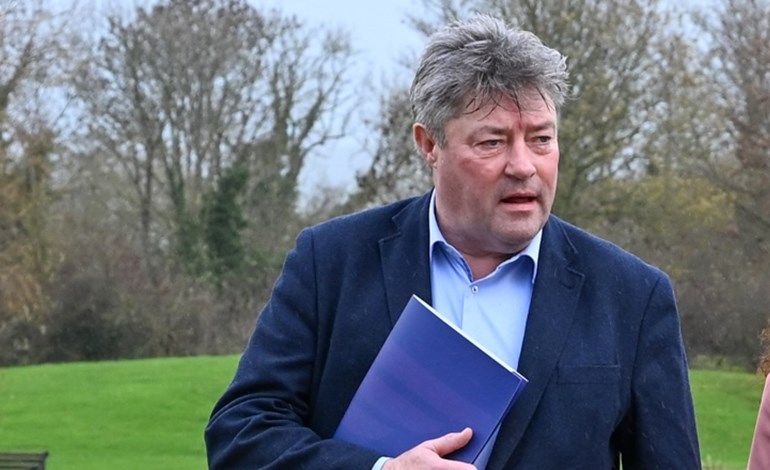
“The 100% community rule made projects untenable,” Richard Walshe (pictured), chairperson of the IWFA, said.
“Banks simply cannot finance inexperienced community projects.
“The fastest energy we can build is on Irish soil, by Irish farmers, for Irish communities. Irish wind farmers need to jump through too many hoops to build turbines and get connected to the grid.
“We’re asking the Government today to revert to a 51 per cent REC model, pay a fair market rate for wind energy, allow hybrid connections and finally get out of our own way on planning,” Walshe said.
“We didn’t run out of wind We ran into bureaucracy, banks can’t fund,” the chairman added.
“Every delay costs households and businesses. Our members stand ready to deliver, but only if planning, grid and market rules finally line up.” Walshe concluded.
